Can a computer really feel? myth and reality of Affective Computing
Keywords:
affective computing, emotions, human-computer interaction, technology, artificial intelligenceAbstract
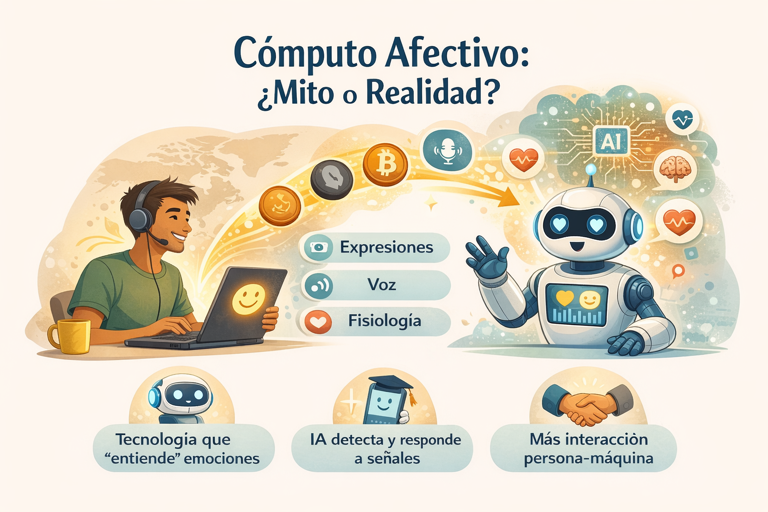
In recent years, Affective Computing (AC) has gained relevance by raising the possibility of computers recognizing and responding to human emotions. This topic is important because many people interact daily with technologies that seem to "understand" how they feel, leading to questions about whether machines can truly experience emotions or merely simulate their comprehension. This article addresses affective computing from an accessible perspective, explaining its origins, basic operation, and the types of emotional signals that can be analyzed, both those that are visible and those derived from interaction with devices. Examples of current applications in video games, mobile devices, education, marketing, and medicine are presented, demonstrating how these technologies are already part of everyday life. Finally, the article reflects on what this means for people and the ethical and technological challenges that accompany the future of affective computing, inviting the reader to consider what the relationship between humans and technology will look like in the coming years.
Downloads
Published
Issue
Section
License
Copyright (c) 2026 TECING: Tecnología, Electrónica, Computación e Ingeniería

This work is licensed under a Creative Commons Attribution-ShareAlike 4.0 International License.