¿Puede una computadora “sentir”? mito y realidad del Cómputo Afectivo
Palabras clave:
cómputo afectivo, emociones, interacción humano-computadora, tecnología, inteligencia artificialResumen
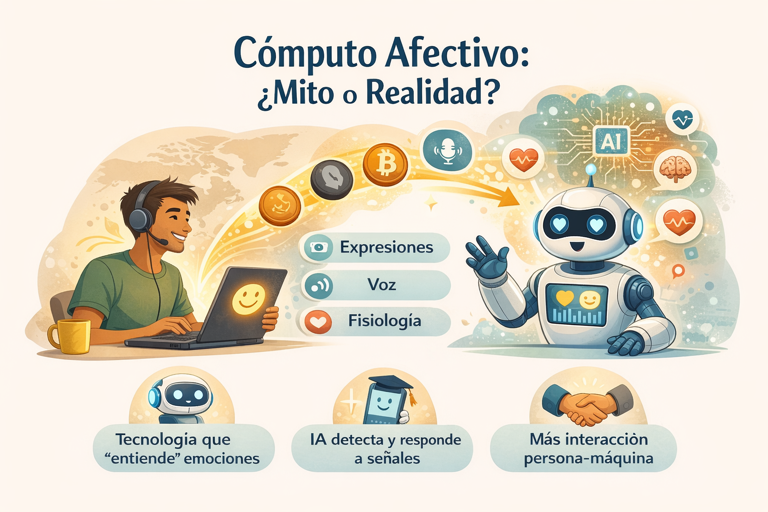
En los últimos años, el Cómputo Afectivo (CA) ha ganado relevancia al plantear la posibilidad de que las computadoras reconozcan y respondan a las emociones humanas. Este tema resulta importante porque muchas personas interactúan diariamente con tecnologías que parecen “entender” cómo se sienten, lo que genera preguntas sobre si las máquinas pueden realmente experimentar emociones o solo simular su comprensión. En este artículo se aborda el cómputo afectivo desde una perspectiva de divulgación, explicando su origen, su funcionamiento básico y los tipos de señales emocionales que pueden analizarse, tanto visibles como derivadas de la interacción con dispositivos. Se presentan ejemplos de aplicaciones actuales en videojuegos, dispositivos móviles, educación, marketing y medicina, mostrando cómo estas tecnologías ya forman parte de la vida cotidiana. Finalmente, se reflexiona sobre lo que esto significa para las personas y sobre los retos éticos y tecnológicos que acompañan el futuro del cómputo afectivo, invitando al lector a cuestionar cómo será la relación entre humanos y tecnología en los próximos años
Publicado
Número
Sección
Licencia
Derechos de autor 2026 TECING: Tecnología, Electrónica, Computación e Ingeniería

Esta obra está bajo una licencia internacional Creative Commons Atribución-CompartirIgual 4.0.